
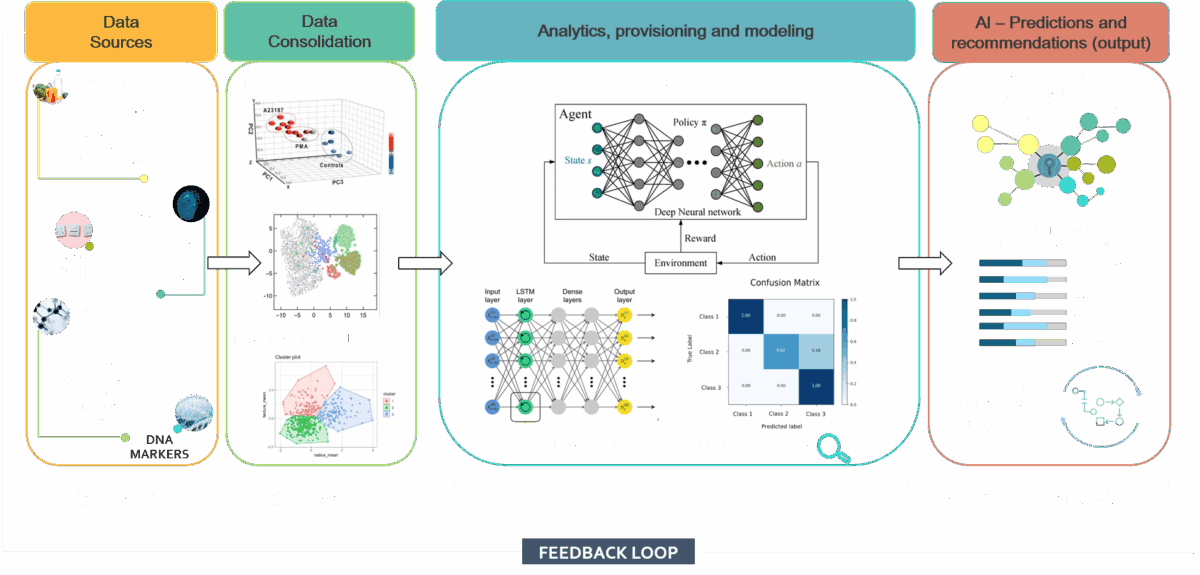
DigiBiomics is developing an AI-driven platform to revolutionize the diagnosis and treatment of major depressive disorder (MDD). Leveraging EEG-based functional connectivity data alongside clinical, demographic, and genetic information, our platform enables accurate, biomarker-based diagnosis and personalized treatment recommendations.
Problem: Major depressive disorder (MDD) poses a substantial treatment challenge, with only a 30% success rate for patients responding positively to first-line antidepressant medications. This low efficacy rate, coupled with the subjective nature of assessments and a drawn-out trial-and-error process for medication adjustments, extends patient suffering and inflates healthcare costs. The need for an objective, data-driven approach in diagnosing and treating MDD is urgent, as current methods leave patients waiting too long for effective treatment.
Approach: DigiBiomics addresses this challenge through an AI-powered platform that uses EEG-based functional connectivity data in combination with clinical, demographic, and genetic insights. Our approach seeks to make MDD diagnosis both precise and efficient by employing biomarkers for accurate disease identification, crafting personalized treatment plans based on a comprehensive profile of each patient, and predicting individual responses to antidepressants with high accuracy. This advanced AI-driven approach has the potential to cut down the lengthy trial-and-error period and allow clinicians to initiate effective treatment faster, ultimately improving patient outcomes.
Solution: The DigiBiomics platform integrates various data sources to generate a full patient profile, essential for precise diagnosis and personalized treatment. We analyze demographic data such as age, gender, and socioeconomic status, and include clinical information from standard psychiatric assessments and medical history. EEG functional connectivity data provides objective connectivity measures that improve diagnostic accuracy and enable predictive insights for antidepressant response. Additionally, genetic markers offer personalized treatment options, while environmental factors—such as lifestyle, stress levels, and social determinants—enhance the contextual understanding of each patient’s mental health.